
Tunisia Desert Photography Guide
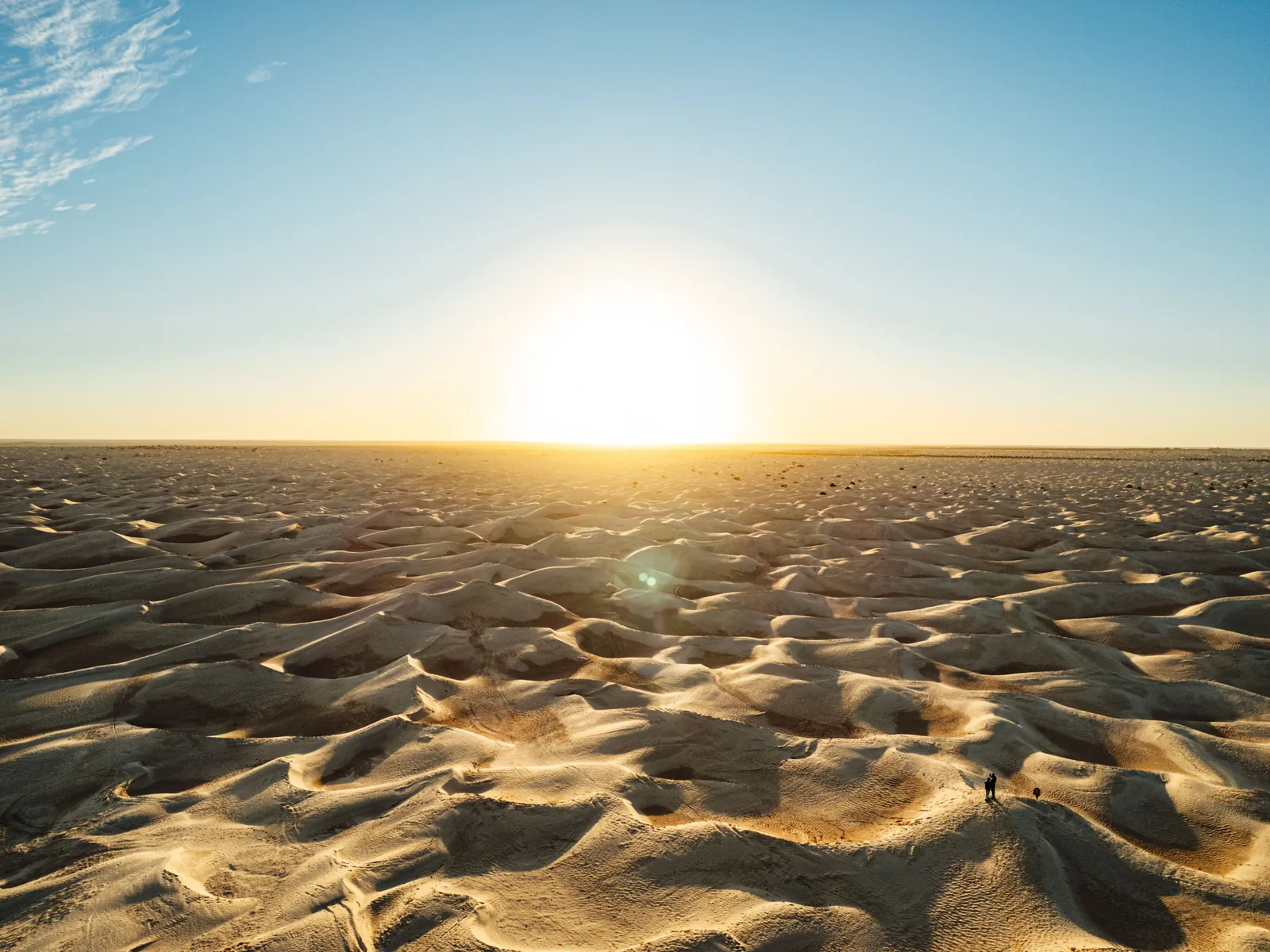
The Tunisian Sahara is a photographer's paradise — golden dunes, Star Wars ruins, salt lake mirages, and night skies without a trace of light pollution. Here is how to capture it all, from gear choices to the best times and locations.
Essential Gear
- Camera: Any interchangeable-lens camera works. A wide-angle lens (16-35mm) captures the vast dunes; a telephoto (70-200mm) compresses the layers.
- Tripod: Essential for night photography and long exposures at golden hour.
- Lens cloth and air blower: Sand is the enemy — clean constantly.
- Spare batteries and cards: Cold desert nights drain batteries; heat can too.
- Smartphone: Modern phones take excellent desert shots. Bring a gimbal for video.
Light & Timing
The golden hour (30 minutes after sunrise and before sunset) turns the dunes into sculpted gold. The blue hour (just before sunrise) adds dramatic cool tones. Midday light is harsh and flat — use it for interiors (Matmata caves, ksour). Overcast days are rare but produce moody, cinematic images.
Best Photo Spots
- Grand Erg Oriental dunes (Douz/Sabria) — sweeping S-curves at golden hour. Visit Douz.
- Mos Espa set — the most photogenic Star Wars location. Visit Star Wars guide.
- Chott el Jerid — mirages and pink salt at sunrise. Visit Chott el Jerid.
- Chenini — dramatic cliff village at golden hour. Visit Chenini.
- Mides canyon — layered rock walls. Visit Mides.
Shooting in Sand
Sand and cameras do not mix. Change lenses inside a bag or a jacket, never in the wind. Keep a UV filter on your lens to protect the front element. Wipe the body with a microfiber cloth regularly. Store gear in a sealed bag overnight — dew and fine sand combine into a damaging paste.
Night Photography
With zero light pollution, the Sahara is one of the best places on Earth for astrophotography. Use a wide-angle lens at f/2.8 or wider, ISO 3200-6400, and 15-25 second exposures. A desert camp with a fire or tent makes a compelling foreground. The best nights are new-moon periods. See stargazing.
Frequently Asked Questions
A wide-angle lens for dunes and stars, a telephoto for layered landscapes, a tripod for golden hour and night shots, and plenty of lens cloths and air blowers to fight the sand.
The golden hour — 30 minutes after sunrise and before sunset — is when the dunes are most photogenic. The blue hour before sunrise adds drama. Avoid midday for landscapes.
Change lenses inside a bag, keep a UV filter on, wipe constantly with a microfiber cloth, and store gear sealed overnight to avoid dew and fine sand buildup.